Pick up a USB-C cable and it feels like a simple object: a plug, a length of rubbery cord, another plug. Inside, it is a small piece of precision manufacturing. Copper wires have to be joined to tiny contacts, every joint has to survive thousands of plugs and bends, and the materials involved are sourced from across the world. This guide looks at what is inside your cable, why solder matters, where metals such as indium and gallium fit in, and who makes it all possible.
What is Inside a USB Cable?
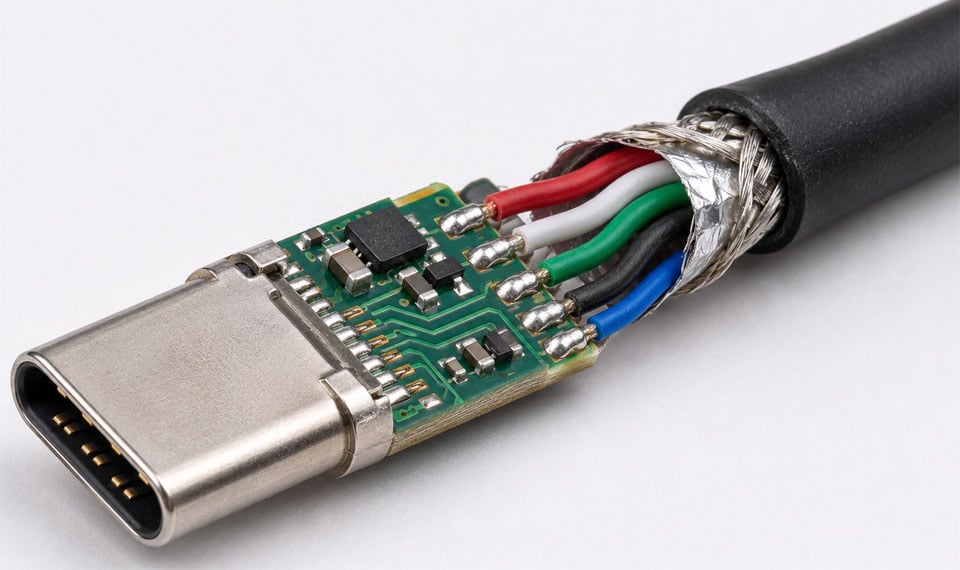
A typical cable has four main parts. Copper conductors carry power and data. Insulation and shielding keep signals clean and protect the wires. A connector shell with plated metal contacts mates with your device. And in many designs, small wires are attached to those contacts, or to a tiny circuit board inside the plug, with solder.
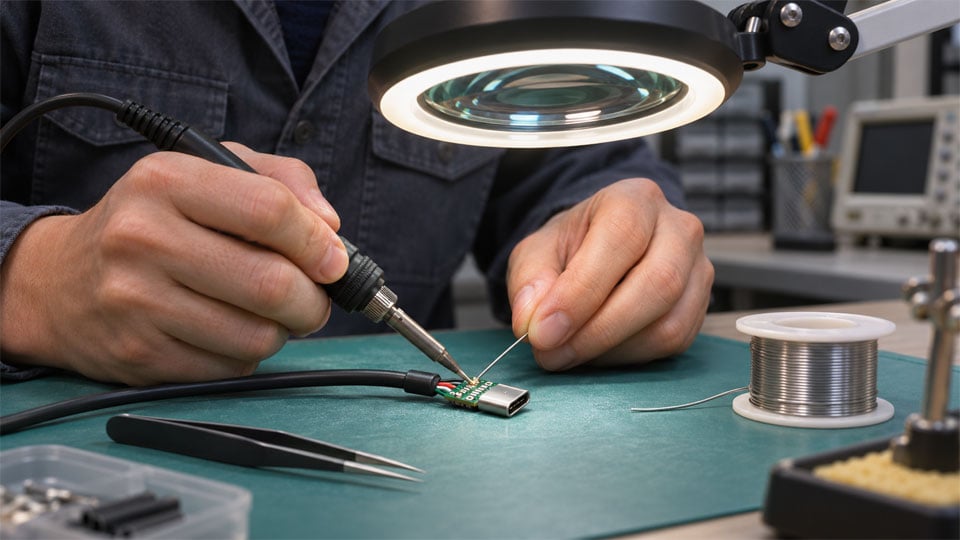
That last detail is why materials engineers care about cables. A solder joint is a permanent connection between two different metals, and it has to stay reliable while the cable is yanked, twisted, and heated by charging currents. A weak joint is one of the most common reasons a cable fails.
Why Solder Is Not Just Solder
Solder alloys differ in melting temperature, strength, and how well they resist cracking over time. Regulation has also shaped them. The EU’s RoHS Directive limits lead in electrical and electronic equipment to 0.1 percent by weight in each homogeneous material, which pushed the industry toward lead-free solders, and because electronics are sold globally, those choices spread well beyond Europe.
Most everyday cables use common tin-based solders. Specialty alloys, including those that contain indium, are used where a lower melting temperature or extra reliability matters. USGS lists alloys and solders among the end uses of indium, alongside electrical components and semiconductors, so the metal is part of the electronics supply chain even when you cannot see it.
Where Indium and Gallium Fit In
The USGS Mineral Commodity Summaries 2026 report that indium tin oxide coatings, used mostly in flat-panel displays, account for most global indium consumption. The United States consumed an estimated 220 tons of refined indium in 2025 and relied on imports for all of it. Indium is mostly obtained as a byproduct of zinc ore processing, so its supply depends on a different industry entirely.
Gallium has a similar profile. According to USGS data on gallium, gallium arsenide and gallium nitride are used for integrated circuits, which took 73 percent of U.S. consumption in 2025, and for optoelectronic devices such as LEDs, which took 26 percent. The country was 100 percent net import reliant. Some compact fast chargers use gallium nitride power transistors, which is one reason this metal is now part of everyday charging gear.
The Manufacturing Jobs Behind the Materials
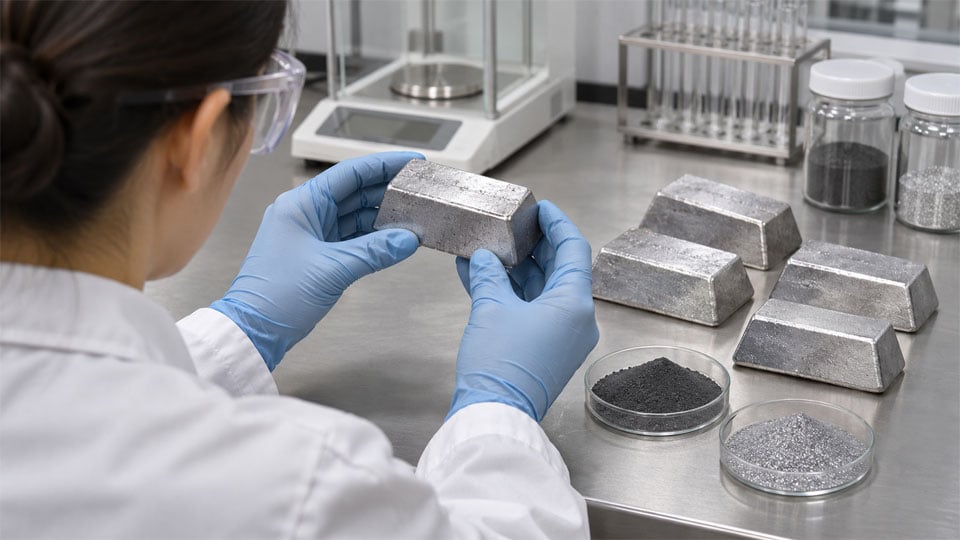
Someone has to turn raw feedstock into usable alloys, powders, and solders, and recover metals instead of wasting them. The listing page for indium corporation careers shows what that workforce looks like. At the time of writing it included an extractive process development metallurgist working on metal reclaim for indium and gallium, a material scientist focused on separating and purifying rare metals, chemical and manufacturing process engineers, an engineer for manufacturing systems and inline quality monitoring, quality technicians, an environmental health and safety engineer, a production planner, shipping and receiving technicians, supervisors, and a plant manager.
Two points stand out. The work covers the whole chain, from laboratory research to the loading dock. And all 33 listed openings were on-site, in New York and Illinois, with no remote roles, which reflects how closely this work is tied to equipment and materials.
What It Means for Buyers and Job Seekers
- Buyers do not need to inspect solder. Choose cables from makers that state compliance with relevant standards, and replace any cable that heats up or fails often.
- Students and early-career workers can look at materials science, chemical or process engineering, quality, and environmental health and safety as practical routes into electronics manufacturing.
- Co-op and internship listings are a low-risk way to try the work before committing.
Looking Ahead to 2027
Expect more attention to where critical metals come from and how much can be recovered and reused. USGS reporting highlights how dependent the country is on imports for indium and gallium, which gives recycling and domestic processing skills more weight. Charging and connector standards will keep evolving, but the underlying need for reliable materials and skilled people will not change.
Conclusion
The next time you plug in a cable, remember that it holds a chain of decisions about alloys, regulation, and global supply, carried out by chemists, engineers, technicians, and planners. It is a reminder that the quiet parts of your devices are built by people with very specific skills.