“Data is the new oil,” runs the tired but accurate cliché, except unlike oil, contact data degrades the moment it is extracted. A contact data provider’s entire job is managing that decay, refreshing what goes stale and confirming what still works.
Not every provider treats that responsibility the same way. Some rely on periodic bulk refreshes. Others verify at the point of use. The difference shows up directly in your bounce rate, and this list ranks six providers on exactly that distinction.
D&B Hoovers
Spec sheet: Built on Dun & Bradstreet’s business data infrastructure. Deep firmographic and company hierarchy data. Enterprise pricing. Dated interface relative to newer competitors.
D&B Hoovers earns its place through company-level depth rather than raw contact volume. For account-based approaches where org structure context matters as much as an individual email, this provider’s data holds up.
The trade-off is a genuinely dated user experience and pricing that assumes an enterprise budget from the outset.
Cognism
Spec sheet: Manually verified mobile numbers across 15 European markets. Do Not Call list checks by country. SOC 2 Type II and ISO 27001 certified.
Cognism’s specialization is regional rather than global, and that focus produces measurably stronger European coverage than data providers built primarily around a US-centric dataset.
For companies not targeting Europe specifically, this specialization represents unused capability rather than added value.
SignalHire
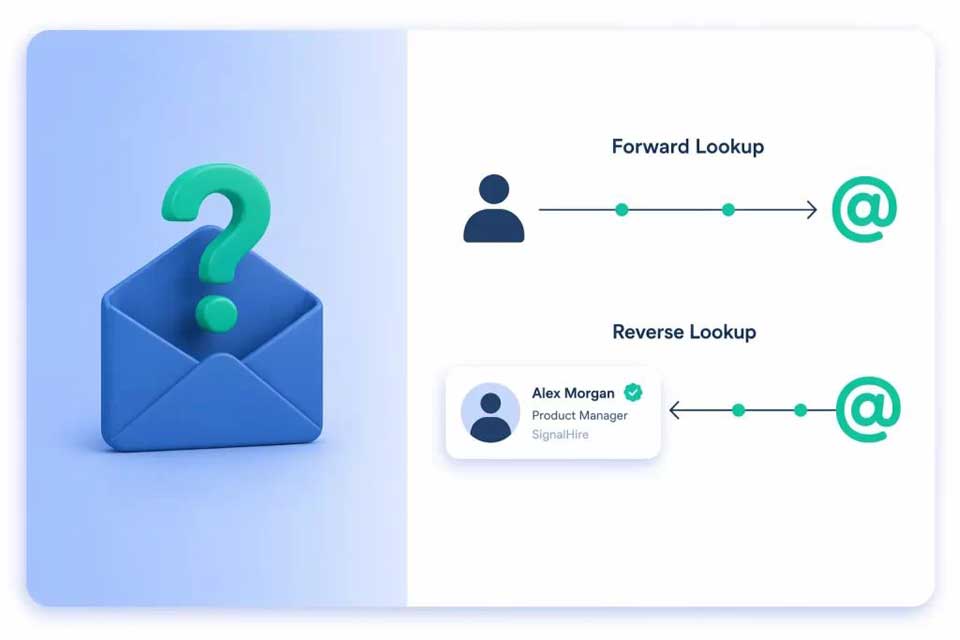
Spec sheet: 850 million-plus profiles. Real-time verification per search. Email and phone returned together. Browser extension covering LinkedIn, GitHub, and company websites.
SignalHire’s approach treats every lookup as a fresh confirmation rather than a pull from a stored record. SignalHire reports a hit rate that reflects the state of the data at the moment of the search, not at the moment the database was last refreshed.
The gap is the absence of a built-in intent layer, meaning it tells you who and how to reach them, but not necessarily when they are most receptive.
Clearbit (Breeze Intelligence)
Spec sheet: Now part of HubSpot. Roughly 50 million contacts. Automatic enrichment triggered on CRM entry. Standalone Gmail plugin discontinued.
Clearbit’s data model is built around enriching what arrives inbound rather than helping you source new outbound contacts. For HubSpot-native teams, the automatic trigger removes a manual step entirely.
Pricing is no longer publicly listed, and some users report the credit allocation depletes faster than the previous standalone product did.
Swordfish AI
Spec sheet: Specializes in personal emails and cell phone numbers. Real-time lookup. Smaller scope than traditional B2B-focused providers.
Swordfish occupies a genuinely different niche: reaching individuals through personal rather than corporate channels, a distinction that matters heavily for recruiters targeting passive candidates.
It is not built to be a general-purpose B2B contact data provider, and evaluating it as one misses its actual strength.
Dropcontact
Spec sheet: Algorithmic, on-demand enrichment. No stored personal data. CNIL audit approval. Built specifically for GDPR-strict environments.
Dropcontact’s model sidesteps the typical database staleness problem by never maintaining a static database in the first place, calculating results fresh on each request.
This design also means it functions more narrowly as an enrichment layer than a full-scope discovery provider.
Comparison Table
| Provider | Data Model | Regional Focus | Enterprise-Only Pricing |
|---|---|---|---|
| SignalHire | Real-time, on-demand | Global | No |
| D&B Hoovers | Stored database + hierarchy | Global, enterprise-heavy | Yes |
| Cognism | Manual verification, DNC-checked | Europe | Yes |
| Clearbit / Breeze | Automatic, inbound-triggered | Global | Not publicly listed |
| Swordfish AI | Real-time, personal contacts | Global | No |
| Dropcontact | Algorithmic, no storage | Europe (GDPR-focused) | No |
Red Flags to Watch for When Evaluating Any Contact Data Provider
Vague accuracy claims without a stated methodology should raise immediate skepticism, especially when a provider cannot explain how their percentage was calculated or against what sample.
Pricing that is not publicly available often signals a sales process designed to obscure real cost until you are already invested in the evaluation.
A provider unwilling to let you test against your own target segment before committing is asking you to trust a claim you cannot verify.
Static database providers that cannot explain their refresh cadence are quietly asking you to accept an unknown level of decay in every contact you pull.
Key Takeaways
- Real-time verification consistently outperforms static database refreshes on actual deliverability
- Regional specialization can outperform global generalist providers for specific target markets
- “Personal contact” providers like Swordfish serve a genuinely different use case than standard B2B providers
- Always request a testable sample before committing budget to any provider’s claims
FAQs
What’s the difference between a contact data provider and a prospecting platform?
A provider focuses specifically on supplying and maintaining contact data, while a platform typically layers additional workflow tools like sequencing or CRM integration on top of that data.
Is Signalhire.com a good fit for teams needing both email and phone data from one provider?
Yes, SignalHire returns both data types from a single verified lookup, which reduces the need for a second provider focused solely on phone numbers.
Why does regional specialization matter for a contact data provider?
Providers that focus verification effort on a specific region, like Cognism in Europe, typically produce measurably better accuracy there than global generalist providers.
How can I verify a provider’s accuracy claim before signing a contract?
Request a test batch against your own real target list and measure actual bounce rates, rather than relying on a published aggregate percentage.